
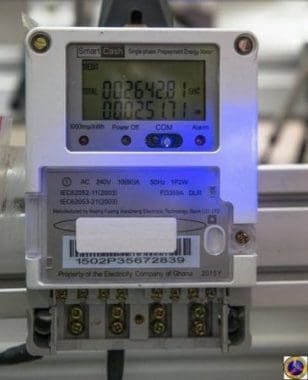

The public anger over fast-running prepaid electricity meters that has gripped Ghana in recent months did not emerge from nowhere. A review of earlier reporting and regulatory records confirms that consumers were raising identical concerns as far back as November 2024, when the Public Utilities Regulatory Commission (PURC) was already conducting audits of the newly installed smart meters amid a flood of overbilling complaints. That the regulator is again examining the same issue in early 2026 points to a pattern that neither a change in government nor a series of tariff reviews has managed to break.
A Cycle That Keeps Returning
When the PURC announced in late 2024 that it was probing meters installed by the Electricity Company of Ghana (ECG) and the Northern Electricity Distribution Company (NEDCo), officials framed it as a decisive intervention. Consumers were told their grievances were being heard. The audit promised answers. Yet the complaints did not disappear. In the weeks and months that followed, reports of prepaid credit draining faster than usage could explain continued to spread, and by early 2026, the issue had returned to the centre of public debate with even greater force, forcing another round of regulatory promises and investigations. The cycle, consumer outcry followed by audit announcement followed by unresolved complaints, has now repeated itself at least twice within fourteen months.
Hardware Fault or Tariff Arithmetic?
At the heart of the matter is a question that neither ECG nor the PURC has answered with the transparency consumers are demanding. Are specific models or batches of the smart prepaid meters physically defective, running faster than they should as a matter of hardware malfunction? Or is the perceived speed of credit depletion a product of how quarterly tariff adjustments are applied within the meter’s billing logic, making the financial impact feel sudden and disproportionate even when the calculation is technically correct? Both explanations carry serious implications. If the meters are faulty, a replacement or recalibration programme is required at scale. If the issue is tariff structure, then consumers need accessible, plain-language explanations of how the cost pass-through formula works in practice. The absence of a clear, publicly verified answer to this question has allowed public suspicion to fill the vacuum.
The Second Quarter Problem
The stakes of this unresolved debate have risen considerably because of timing. Ghana’s first quarterly tariff review of 2026 is due before the end of March, and pressure is already building from multiple directions. The Centre for Environmental Management and Sustainable Energy (CEMSE) has argued in a recently released policy review that consumers were overcharged by an estimated GH¢1.5 billion in the fourth quarter of 2025 because the PURC used exchange rate and inflation assumptions that turned out to be significantly inaccurate, and that a correct application of the commission’s own formula would produce a tariff reduction of approximately 11 percent. The PURC has not yet responded publicly to those calculations.
If the regulator instead approves any further upward adjustment in the second quarter while meter speed complaints remain unsettled, analysts warn the compounding effect on household and business budgets could trigger a public backlash more severe than anything seen in recent years.
Ghana’s electricity consumers have absorbed a 9.86 percent tariff increase since January 1, 2026, on top of multiple quarterly adjustments in 2024 and 2025. The Trades Union Congress (TUC) has noted that the January increase effectively cancelled out the value of the 2026 public sector pay rise. Against that backdrop, what consumers are watching for is not simply whether tariffs go up or down, but whether the regulatory system that governs their electricity costs can demonstrate it is working in their interest. The smart meter question, unresolved since 2024, has become a test of that trust.

